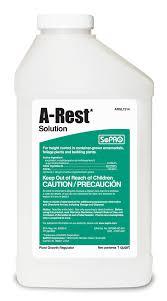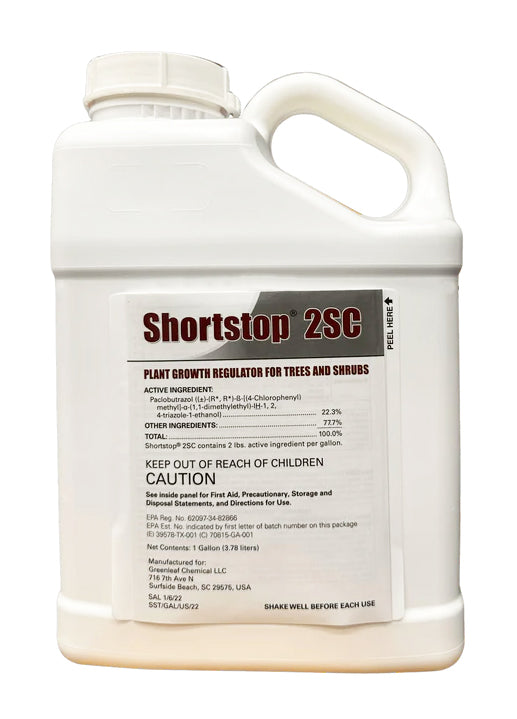
Nursery & Landscape Plant Growth Regulators
29 products
Showing 25 - 29 of 29 products
Professional Plant Growth Regulators for Nursery and Landscape Use
Plant growth regulators provide targeted control over plant height, internode elongation, branching, flowering, fruit development, defoliation, and other physiological processes. They are used in commercial nurseries, greenhouses, shade houses, interiorscapes, and managed landscapes to produce more uniform plants, improve finished quality, reduce labor, and maintain vegetation within defined growth specifications.
Available products may include growth retardants, chemical pinching agents, branching promoters, ethylene-releasing compounds, flowering regulators, rooting products, and formulations used to suppress unwanted fruit or seed development.
Growth Regulation in Nursery Production
Nursery and greenhouse PGR programs can reduce excessive stem elongation, shorten internodes, improve plant compactness, increase lateral branching, regulate flowering, and produce a more uniform finished crop. Depending on the active ingredient and label, applications may be made as foliar sprays, substrate drenches, liner dips, bulb soaks, or directed treatments.
Growth response is influenced by plant species and cultivar, production stage, application rate, spray volume, drench volume, substrate composition, moisture, fertility, temperature, and plant vigor. Rates are frequently expressed as parts per million of active ingredient, making accurate calculation and application-volume control essential.
Landscape Growth Management
Landscape PGRs can be used to manage vegetative growth, reduce pruning frequency, limit shoot extension, suppress nuisance fruit, improve canopy density, or maintain trees and shrubs within site-specific height and clearance requirements.
Applications may include foliar sprays, basal treatments, soil drenches, soil injection, or trunk injection, depending on the product and plant species. Systemic soil- and trunk-applied products may provide extended growth regulation, but response time and duration vary with active ingredient, plant size, root activity, soil conditions, and application timing.
Active Ingredients and Plant Response
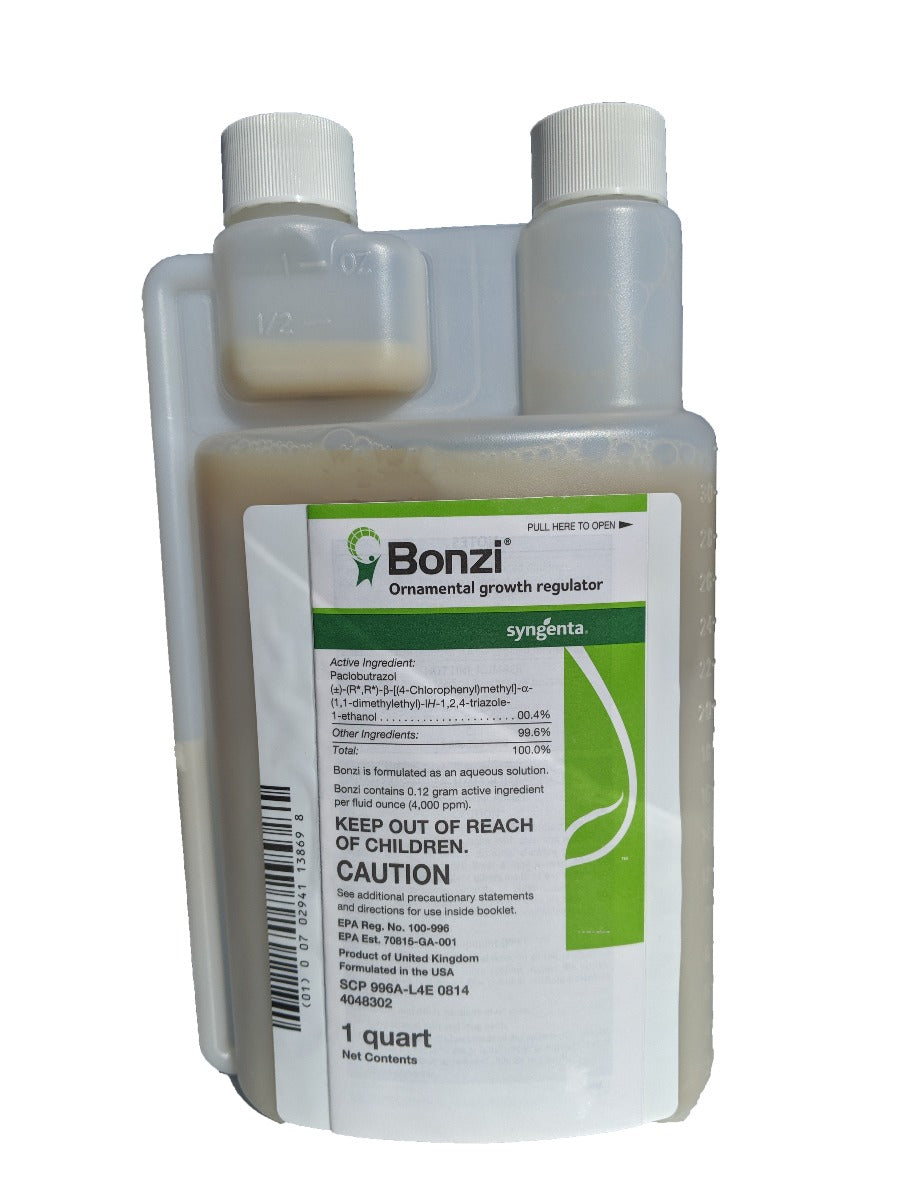
Paclobutrazol, uniconazole, and flurprimidol regulate growth primarily by inhibiting gibberellin biosynthesis, which reduces cell elongation and internode growth. Application rate and placement influence the degree and duration of growth suppression.
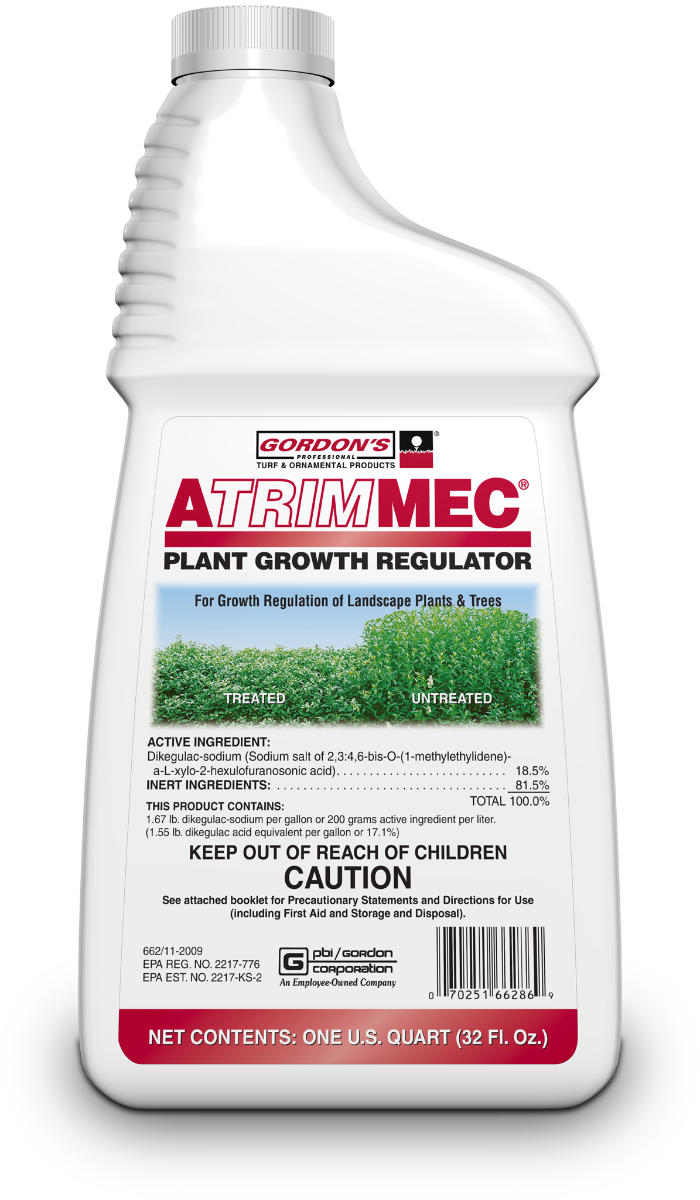
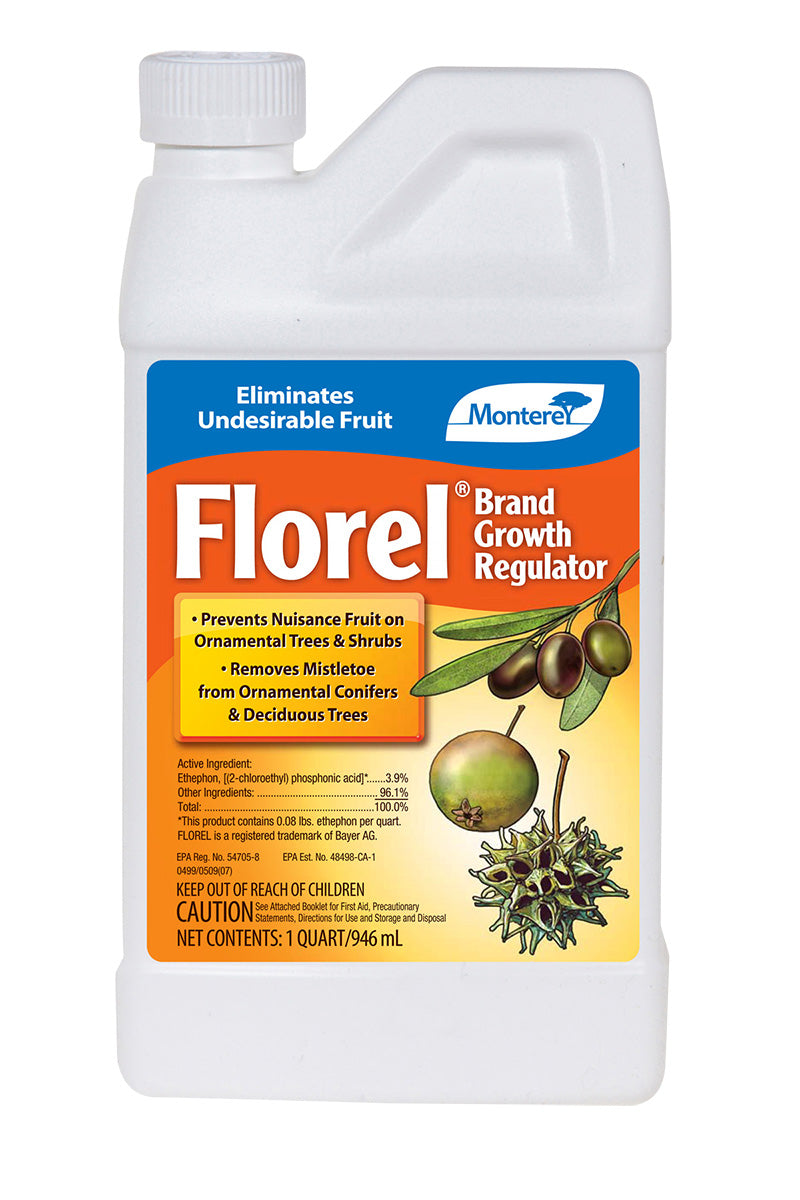
Ethephon is absorbed by plant tissue and releases ethylene, producing responses that may include increased branching, flower induction, flower or fruit abscission, defoliation, or suppression of unwanted fruit. Dikegulac sodium and other chemical pinching agents can interrupt apical dominance and promote lateral branching in labeled ornamental species.
Plant responses differ substantially among species and cultivars. Products with the same general function are not interchangeable without considering active ingredient, formulation, concentration, application method, and crop-specific labeling.
Selecting and Applying Plant Growth Regulators
Select a PGR according to the desired plant response, ornamental species, cultivar, production stage, growing environment, and application method. Compare active ingredient, concentration, labeled rate range, solution volume, residual response, and compatibility with the existing production or landscape-management program.
Excessive rates or repeated applications can produce persistent growth suppression, delayed flowering, distorted growth, or unacceptable crop response. Begin with labeled rates appropriate for the species and conditions, maintain accurate application records, and evaluate sensitive or unfamiliar cultivars before treating a large production block.
Why Buy Plant Growth Regulators from Intermountain Turf Supply?
Intermountain Turf Supply offers professional plant growth regulators for nursery growers, greenhouse producers, landscape contractors, arborists, municipalities, interiorscape managers, and other ornamental plant professionals.
Customers can compare active ingredients, physiological effects, application methods, labeled species, use rates, concentrations, package sizes, and cost per finished gallon. Our professional product selection supports applications ranging from individual landscape trees and shrubs to large greenhouse and nursery-production programs.