

Description
- Description
- Specs
- Labels and SDS Forms
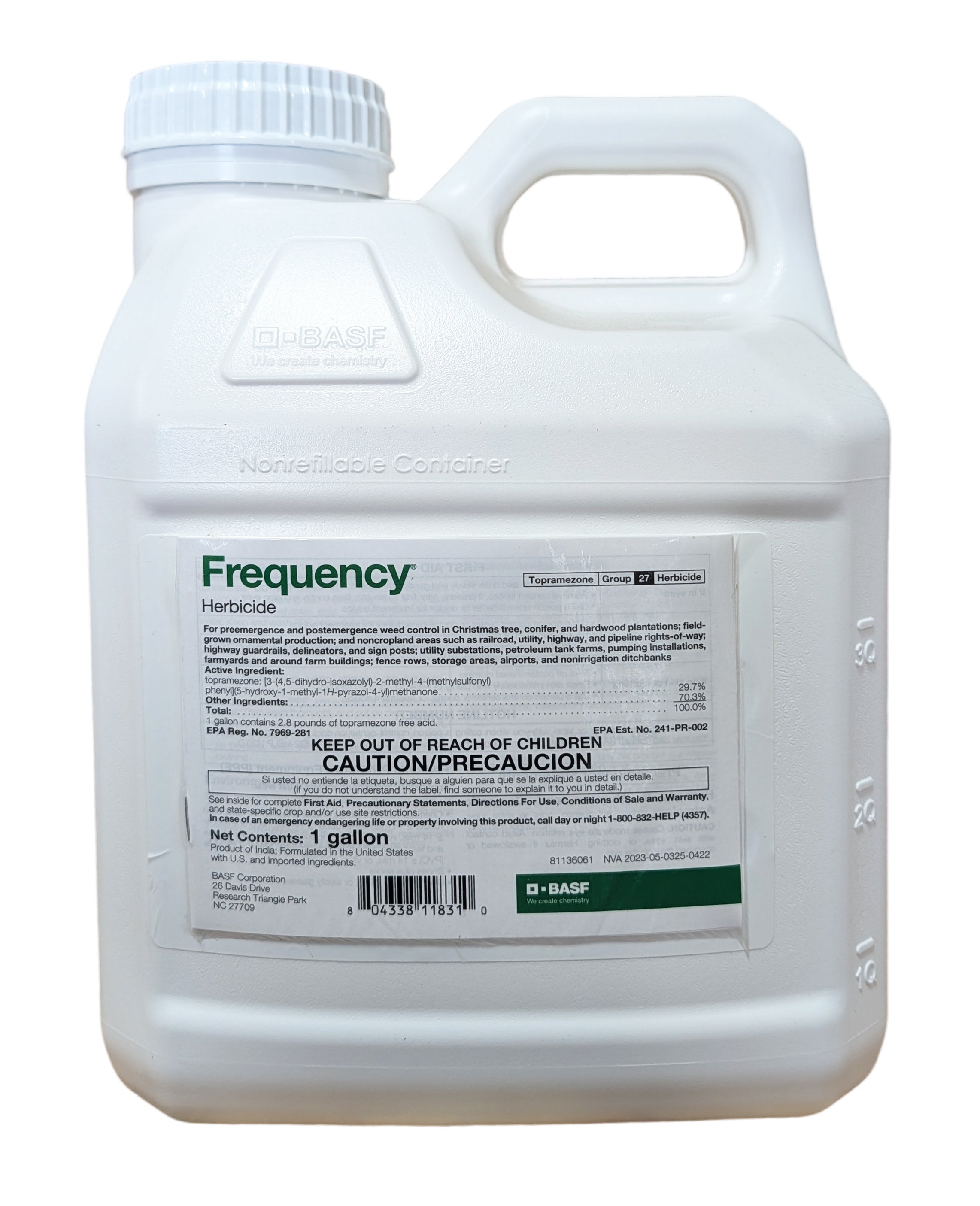
Frequency Herbicide
Frequency Herbicide is a broad-spectrum preemergence and systemic postemergence herbicide powered by topramezone for control or growth suppression of broadleaf and grass weeds in noncropland and industrial vegetation management programs. It is labeled for bareground programs, railroad, utility, highway, and pipeline rights-of-way, utility substations, petroleum tank farms, pumping installations, fence rows, storage areas, farmyards, nonirrigation ditchbanks, and similar sites.
As a Group 27 HPPD inhibitor, Frequency provides a different mode of action for vegetation management programs where resistance to other commonly used herbicides is a concern. It offers both residual and postemergence activity, can be tank mixed with other bareground and noncrop herbicides, and provides strong broadleaf control plus warm-season grass control when used according to label directions.
Features & Benefits
✓ Broad-spectrum preemergence and systemic postemergence herbicide for noncropland and industrial bareground programs
✓ Contains topramezone, a Group 27 HPPD inhibitor with a different mode of action for resistance-management programs
✓ Controls or suppresses labeled broadleaf weeds and grass weeds in rights-of-way, substations, railroads, roadsides, pipelines, and other noncrop areas
✓ Absorbed by leaves, roots, and shoots, then translocated to growing points of sensitive weeds
✓ Useful in bareground programs when tank mixed with residual herbicides such as Arsenal PowerLine, Journey, Pendulum AquaCap, Plateau, or diuron
✓ Can be tank mixed with glyphosate to broaden postemergence weed-control spectrum
✓ Non-volatile and labeled for early and late-season applications where conditions support active weed growth
Labeled Use Sites
Frequency Herbicide is labeled for preemergence and postemergence weed control in noncropland areas including railroad, utility, highway, and pipeline rights-of-way; highway guardrails, delineators, and sign posts; utility substations; petroleum tank farms; pumping installations; farmyards and around farm buildings; fence rows; storage areas; airports; and nonirrigation ditchbanks. It is also labeled for use in Christmas tree, conifer, and hardwood plantations, field-grown ornamental production, and selective weeding in certain unimproved and native perennial grass areas.
Target Weeds
Frequency controls or suppresses labeled broadleaf weeds including Palmer amaranth, Powell amaranth, burcucumber, carpetweed, common chickweed, common cocklebur, dandelion, hairy galinsoga, horseweed, marestail, jimsonweed, kochia, common lambsquarters, common mallow, Venice mallow, morningglory species, mustard species, black nightshade, Eastern black nightshade, hairy nightshade, prostrate pigweed, redroot pigweed, smooth pigweed, tumble pigweed, prickly lettuce, common ragweed, giant ragweed, shepherd’s-purse, prickly sida, ladysthumb smartweed, Pennsylvania smartweed, volunteer sunflower, wild sunflower, Canada thistle, Russian thistle, velvetleaf, common waterhemp, tall waterhemp, and white clover.
Frequency also controls or suppresses labeled grass weeds including barnyardgrass, large crabgrass, smooth crabgrass, woolly cupgrass, dallisgrass suppression, giant foxtail, green foxtail, yellow foxtail, goosegrass, seedling johnsongrass, wild proso millet, fall panicum, shattercane, broadleaf signalgrass, and sprangletop.
Application Notes
Apply Frequency according to label directions for the specific use site and application objective. For bareground preemergence applications, apply 4 to 16 fl oz per acre before weed emergence. For early postemergence applications, apply 4 to 16 fl oz per acre before weeds exceed the maximum size or leaf stage listed on the label. Adequate moisture is necessary to activate Frequency for residual control, and dry weather after application may reduce performance.
Postemergence applications require a spray additive for optimum weed control. The label requires an oil-based adjuvant such as methylated seed oil or crop oil concentrate at 1.0% to 1.5% v/v, with methylated seed oil suggested for best performance across a wide range of conditions. Apply postemergence treatments at least 1 hour before rainfall, use adequate spray volume, and thoroughly cover emerged weeds.
Product Information
Active Ingredient: Topramezone 29.7%
HRAC Group: Group 27 Herbicide
Chemical Family: HPPD Inhibitor / Carotenoid Biosynthesis Inhibitor
Formulation: Suspension Concentrate (SC)
EPA Reg. No.: 7969-281
Signal Word: Caution
Manufacturer: BASF Corporation
Use Sites: Noncropland, industrial bareground, rights-of-way, railroads, roadsides, utility substations, pipelines, airports, farmyards, Christmas tree plantations, conifer and hardwood plantations, and field-grown ornamental production
Recommended Tank-Mix Partner: For bareground residual programs, the label lists tank-mix options such as Aston 2SL, Pendulum AquaCap, Propose, or diuron. For broader postemergence control, Frequency may be tank mixed with glyphosate where labeled. Follow the most restrictive directions for all tank-mix products.
Recommended Surfactant: Vortex Xtra
| ACTIVE INGREDIENT | Topramezone 29.7% |
| MANUFACTURER | BASF |
| EPA REGISTRATION | 7969-281 |
| NOT FOR SALE TO | CA |
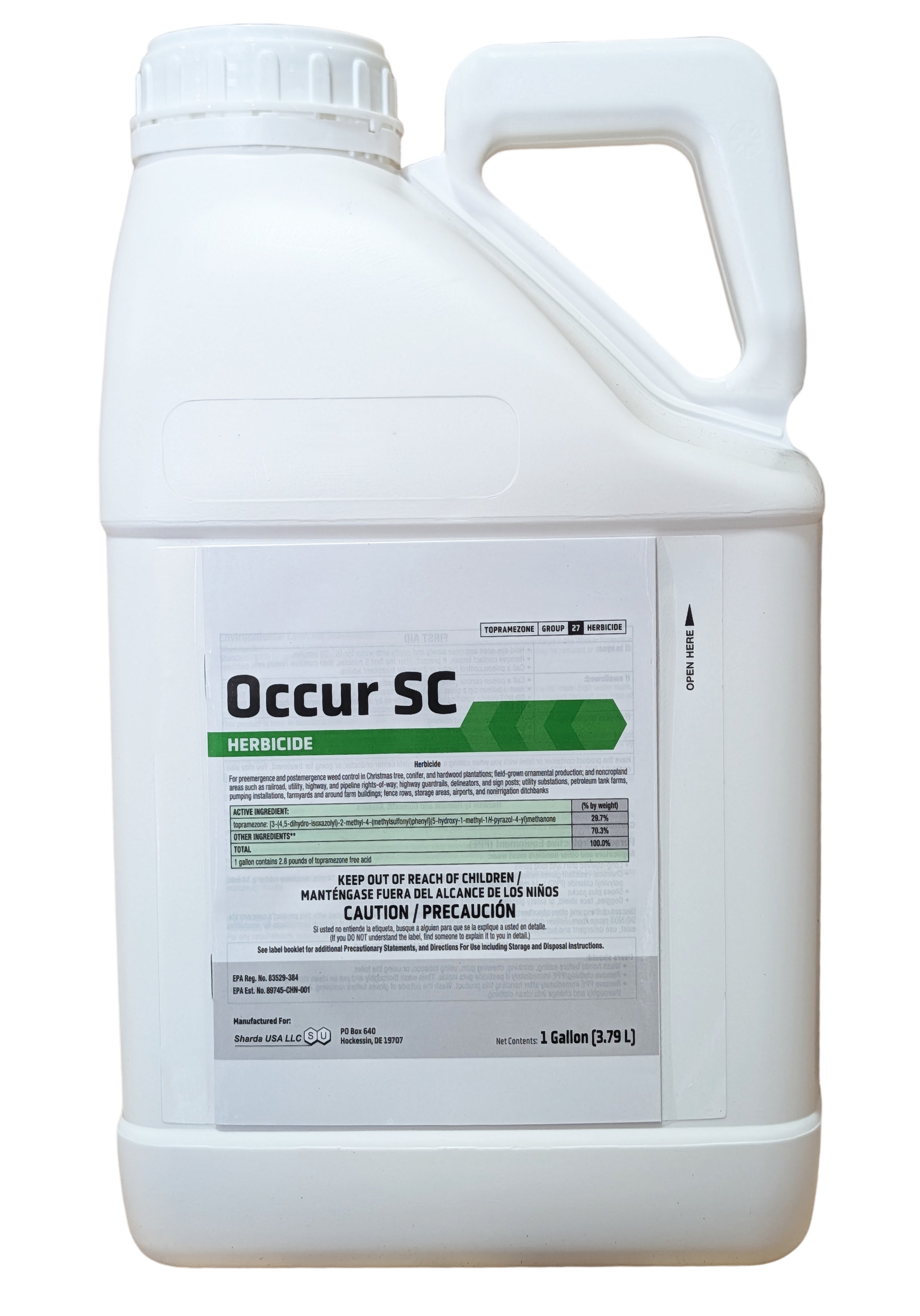
| COMPARABLE PRODUCTS | Occur |
Payment & Security
Your payment information is processed securely. We do not store credit card details nor have access to your credit card information.
