Turf-Parasitic Nematode Control
1 product
Showing 1 - 1 of 1 product
Plant-parasitic nematodes—including sting, lance, root-knot, ring, spiral, dagger, and sheath nematodes—feed on turf roots. Symptoms are nonspecific, so a laboratory assay is essential before treatment.
How to Recognize Turf-Parasitic Nematodes
Affected turf may be thin, pale, drought-prone, slow to recover, or stunted in irregular patches. Roots can be shortened, discolored, stubby, or sparsely branched, but visual symptoms alone cannot identify the nematode species or population level.
Why Damage Develops
Sandy soils, warm temperatures, chronic root stress, low mowing, compaction, and poor water management can magnify damage. Species and damaging thresholds vary with turfgrass and region.
Reduce Pest Pressure
- Submit a properly collected soil and root sample to a diagnostic laboratory before treating.
- Improve rooting depth, irrigation uniformity, drainage, fertility, and mowing practices.
- Re-sample when evaluating a program because turf response and nematode counts must be interpreted together.
What University Research and Extension Guidance Says
NC State advises basing nematicide decisions on laboratory identification, population estimates, turf symptoms, and site history. A positive assay does not automatically prove that nematodes caused the observed decline, and products should be integrated with practices that improve root health.
Choosing and Timing a Turf Treatment
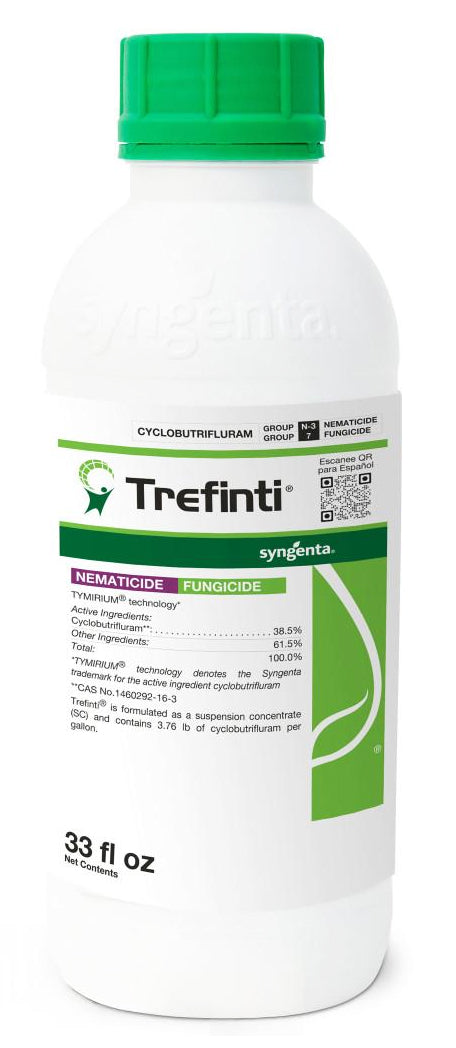
The products below are limited to catalog items tagged for turf-parasitic nematodes. Confirm the exact turf site, application equipment, rate, interval, irrigation, and stewardship requirements on the current label; a diagnostic lab or local extension specialist can help interpret the assay.
Research and label note: Research results help explain pest biology, timing, and product performance, but they do not expand a product label. Confirm the turf species, use site, target pest or nematode, life stage, rate, irrigation directions, and application interval on the current label before use.
University sources: NC State Extension: Nematodes in Turf; NC State Extension: Pest Control for Professional Turfgrass Managers.